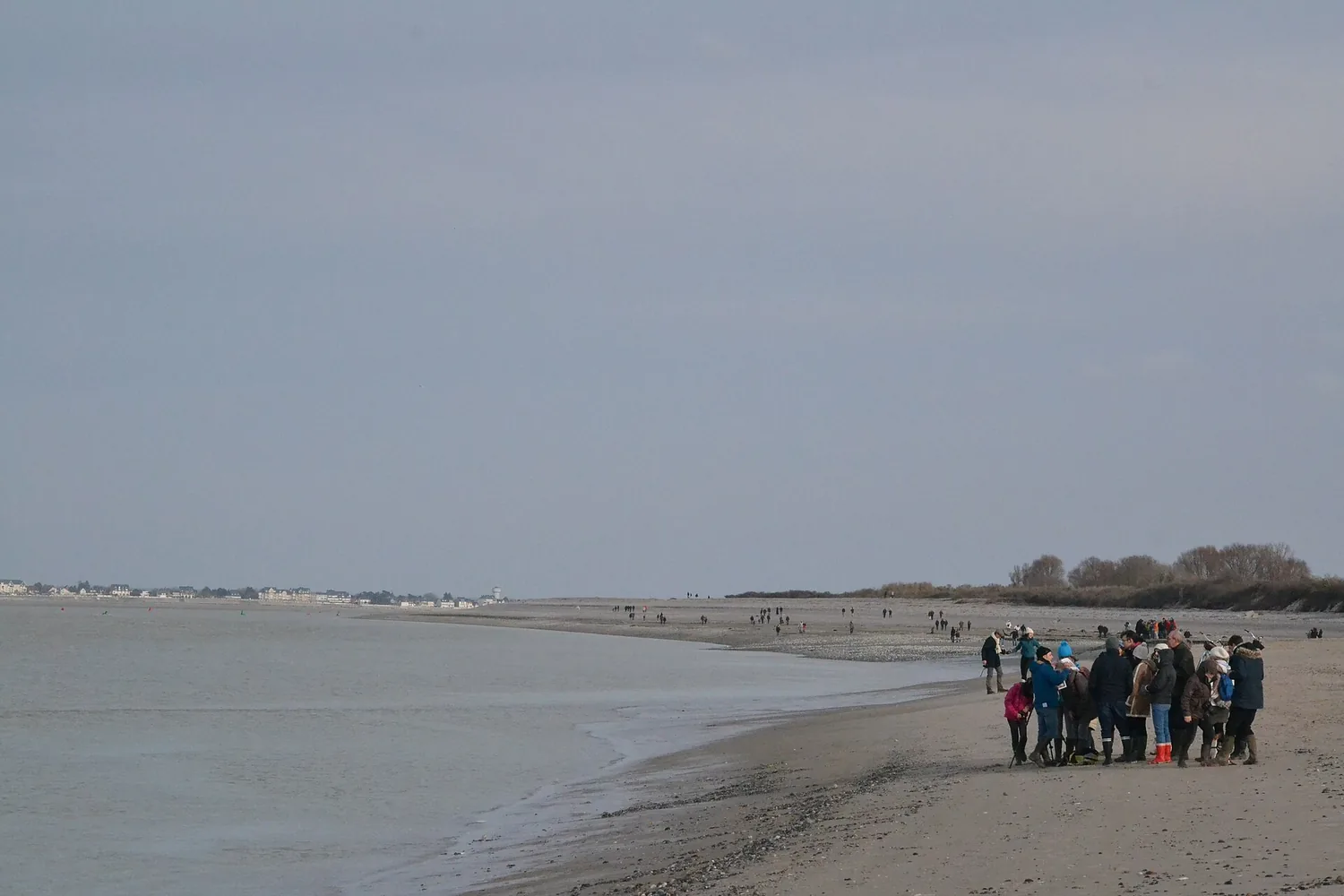
The Baie de Somme is home to the largest seal colony in France. Seeing them stretched out on the sandbanks is one of the great moments of a stay in this part of the country. But these are wild, protected animals, and watching them means following a few simple rules so that you can enjoy the spectacle without ever disturbing it. Here is our guide, 15 kilometres (9 miles) from the Hôtel Aultia.
Two species to look out for
Two species share the bay. The harbour seal, also known as the common seal, is the more emblematic of the two and is mostly present from April to September, with pups born in June and July. The grey seal, larger and heavier, is seen more often between November and March. In practice you can see seals all year round; the best time depends far more on the tide, the weather and a little patience.
Where to watch: the Pointe du Hourdel
The best vantage point from land is the Pointe du Hourdel, at the southern entrance to the bay. From the shingle bank near the harbour and the old blockhouse, you can see far out across the sandbanks where the seals come to rest at low tide. Access is free and there is no long walk involved: it is simply a matter of standing in the right place at the right time.
When to go: it all depends on the tide
Seals haul out onto the sandbanks as the sea withdraws. The best window is around low tide, ideally two to three hours before it. Check the tide times before you set off, without fail, and keep an eye on the returning water: at Le Hourdel it can come in fast and catch out the unwary. Never venture out into the bay on your own.
The golden rule: keep your distance
This is the essential point. Seals are wild, protected animals, and the regulations require you to stay at least 300 metres away. Coming closer sends them fleeing into the water: the disturbance cuts short the rest they need to stay healthy, and it can separate pups from their mothers, putting the young at risk. Failing to respect that distance can result in a fine. A few simple habits:
- Keep your distance, even when the animals seem perfectly relaxed.
- Do not fly drones or kites, and keep dogs well away.
- Never approach a stranded seal: report it to the specialist network, Observatoire Pelagis.
What to bring
At 300 metres, seals are little more than small shapes to the naked eye. Binoculars, or better still a spotting scope, change the experience entirely: you begin to make out behaviour, moulting, the comings and goings between sand and water. Bring sturdy shoes for the shingle too, along with warm and windproof clothing — even in fine weather the wind can be sharp at Le Hourdel.
Better still, go with a guide
For an outing that is both rewarding and respectful, nothing beats a guided walk with a local nature guide. In around two and a half hours they will help you understand the species, the tides and the landscapes of the bay, while making sure the animals are left in peace. Guides belonging to the Qualinat network are trained for exactly this. It also makes a lovely activity for families.
Further reading
The bay within easy reach. Fifteen kilometres from the Pointe du Hourdel, the Hôtel Aultia is the ideal base for going to meet the seals and exploring the Baie de Somme. Plan your visit and enjoy this piece of wild theatre, on the animals’ own terms.
Watching wildlife is never without consequence for the animals themselves: by keeping your distance, you are helping to protect the colony.